
What is GLP2-T?
GLP2-T is a synthetic research peptide classified as a dual receptor agonist, acting on both the glucagon-like peptide-1 (GLP-1) and glucose-dependent insulinotropic polypeptide (GIP) receptors.
This dual action distinguishes it from earlier GLP-1–only compounds, as it may activate multiple hormonal pathways that influence energy metabolism, insulin regulation, and appetite control. It’s also different from triple agonists such as retatrutide.
Preclinical investigations have highlighted GLP2-T’s capacity to mimic and amplify the activity of two endogenous incretin hormones—GLP-1 and GIP. These gut-derived hormones are secreted in response to nutrient intake and are central to stimulating insulin release, lowering glucagon secretion, delaying gastric emptying, and modulating satiety.
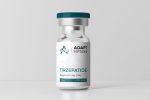
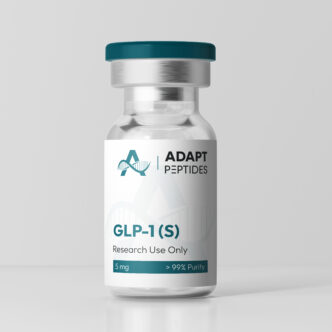
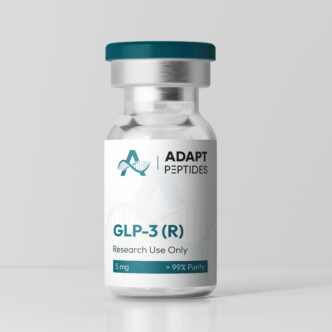
Adapt Peptides supplies GLP2-T as a high-purity lyophilized powder, intended for reconstitution under sterile laboratory conditions. All material is verified through independent testing to confirm peptide identity and purity.
| Disclaimer: GLP2-T is not approved for human consumption, medical use, or therapeutic applications. It is designated strictly for in vitro or preclinical research and must be handled by trained professionals in compliance with applicable regulations. |
Mechanism of Action (Based on Research)
GLP2-T acts as a dual agonist of the GLP-1 (glucagon-like peptide-1) and GIP (glucose-dependent insulinotropic polypeptide) receptors, both of which are integral to the incretin system[1].
Incretins are gut hormones, (GLP-1) and gastric inhibitory polypeptide (GIP), released after eating to boost insulin secretion, reduce glucagon (a hormone that raises blood sugar), slow digestion, and increase satiety
These hormones play critical roles in modulating insulin secretion, regulating blood sugar, and influencing appetite signals[2].
By simultaneously activating GLP-1 and GIP receptors, GLP2-T engages complementary pathways that support metabolic balance. This dual targeting sets it apart as a valuable research tool for studies on energy regulation and glucose control.
GLP-1 and GIP Activation
In laboratory settings, GLP-1 receptor stimulation has been shown to boost insulin release, suppress glucagon secretion, and delay gastric emptying. These mechanisms help stabilize post-meal glucose levels[3].
Although historically less emphasized, GIP receptor activation also contributes to insulin sensitivity and lipid metabolism[4].
When both incretin pathways are stimulated in tandem, as with GLP2-T, early research suggests the combined effect may surpass the impact of GLP-1 agonism alone[5]. This has been linked to improved glucose control and appetite regulation in preclinical models.
Additionally, studies indicate that this dual activity can influence central nervous system pathways involved in satiety while also affecting peripheral processes tied to lipid storage and energy expenditure[6].
These mechanisms are still being investigated, but existing data suggests that GLP2-T’s multi-receptor engagement may provide broader insights into obesity, insulin resistance, and related metabolic disorders compared to single-pathway compounds.
GLP2-T Research Applications
GLP2-T has gained significant attention in preclinical and laboratory research for its role in metabolic function. It has been examined in studies of obesity, insulin signaling, and overall energy expenditure.
Although not approved for medical use, data from animal and in vitro studies indicate that GLP2-T’s dual-agonist profile may offer advantages over GLP-1–only analogs.
Obesity Management
In diet-induced obesity models, GLP2-T has been associated with notable reductions in body weight[8]. These effects appear to stem from multiple mechanisms, including appetite suppression, slower gastric emptying, and enhanced energy expenditure, likely influenced by both central and peripheral hormonal signaling.
Unlike GLP-1–only agonists, some findings suggest GLP2-T may better preserve baseline energy levels, potentially reducing fatigue that can arise with long-term use of single-pathway incretin mimetics [9].
Note: Some reports, including anecdotal feedback and early observational data, describe mild fatigue or reduced energy in certain research contexts. This variability may reflect differences in study design, dosing, or individual response.
Metabolic Syndrome Research
GLP2-T has also been explored as a model compound for metabolic syndrome—a group of interrelated conditions such as high blood pressure, abnormal lipid levels, central obesity, and insulin resistance.
In preclinical trials, the peptide has demonstrated the ability to enhance insulin sensitivity, improve glucose utilization, and lower markers of systemic inflammation[10]. Its dual mechanism may allow for broader modeling of metabolic improvements compared to GLP-1 receptor activation alone.
Diabetes Model Research
Several rodent studies investigating GLP2-T in type 2 diabetes models have shown favorable outcomes, including better glucose tolerance, lower HbA1c, and preserved pancreatic beta-cell activity[11].
Activation of the GIP receptor complements GLP-1’s actions by enhancing glucose-dependent insulin secretion, which may reduce the risk of hypoglycemia in certain research settings. Preclinical findings also suggest potential protective effects on pancreatic islet architecture under prolonged metabolic stress.
Disclaimer: GLP2-T is not approved for human consumption or therapeutic use. All references to biological effects are based solely on controlled laboratory and preclinical research. This compound is intended strictly for scientific investigation by qualified professionals.
GLP2-T Peptide Characteristics
- Molecular Formula: C???H???N??O??
- CAS Number: 2023788-19-2
- Amino Acid Sequence: 39–residue linear peptide conjugated to a C20 fatty diacid chain (complete sequence has proprietary modifications to extend half-life and enhance receptor binding)
- Synonyms: GLP2-T, LY3298176, dual GIP/GLP-1 receptor agonist (research form)
- Molar Mass: ~4,813.5 Da (may vary slightly depending on salt composition)
- Storage Guidelines:
- Store lyophilized powder at room temperature: 68–86°F (20–30°C).
- Routine storage: keep lyophilized peptide at 36–46°F (2–8°C) in a sealed, moisture-free container.
- Long-term storage (months to 1–2 years): maintain below 32°F (0°C).
- Do not freeze reconstituted solutions, as this may compromise peptide stability.
- After reconstitution, store at 36–46°F (2–8°C) and use promptly.
- Avoid repeated freeze–thaw cycles.
Note: GLP2-T is supplied strictly for laboratory research. It is not approved for human use or therapeutic applications.
GLP2-T vs. Semaglutide vs. Retatrutide (Comparison)
| Feature | GLP1-S | GLP2-T | GLP3-R |
| Type | Single agonist (GLP-1) | Dual agonist (GLP-1, GIP) | Triple agonist (GLP-1, GIP, Glucagon) |
| Targets | Appetite, blood sugar | Appetite, blood sugar | Appetite, blood sugar, energy expenditure |
| Mechanism Complexity | Simplest (single receptor) | Moderate (dual action) | Most complex (triple action) |
| Research/Approval Stage | FDA-approved (Ozempic®/Wegovy®) | FDA-approved (Mounjaro®) | Preclinical/early clinical trials (as of 2025) |
| Weight Loss Potential | High (15–20% over 68 weeks) | Very high (~20% over 72 weeks) | Potentially highest (up to 24% at 48 weeks, early data) |
| Glucose Regulation | Strong | Strong | Strong (based on preliminary studies) |
| Additional Effects | Cardiovascular benefits | Improved insulin sensitivity | Increased energy expenditure (animal studies) |
| Approval Status | Approved medication | Approved medication | Research use only |
| Disclaimer | Approved for medical use | Approved for medical use | Research compound, not for human use |
Safety and Side Effects in Research
Findings on GLP2-T’s safety profile to date are largely based on animal studies, in vitro work, and early-phase clinical research. Within these contexts, GLP2-T has demonstrated a generally well-tolerated profile, particularly at doses commonly used in controlled research.
Across multiple preclinical models, adverse reactions have been limited and often species- or dose-dependent. While most results suggest good tolerance, outcomes can vary depending on model organism, protocol design, and experimental conditions.
It is essential to emphasize that the absence of severe side effects in laboratory settings does not imply safety in humans.
Disclaimer: GLP2-T is provided solely for scientific and laboratory research. It is not intended for human consumption, diagnostic purposes, or therapeutic use.
Certificate of Analysis (COA)
Every vial of GLP2-T from Adapt Peptides is accompanied by a Certificate of Analysis (COA) verifying peptide identity, purity, and molecular structure. Each production lot is subjected to independent third-party testing, with purity levels consistently above 99.6%.
Researchers may request a COA at the time of purchase or download the batch CoA at the product page. This gives you confidence in data integrity and reproducibility during experimental use.
Scientific References
- Fisman, E.Z., Tenenbaum, A. The dual glucose-dependent insulinotropic polypeptide (GIP) and glucagon-like peptide-1 (GLP-1) receptor agonist GLP2-T: a novel cardiometabolic therapeutic prospect. Cardiovasc Diabetol 20, 225 (2021).
https://www.tandfonline.com/doi/full/10.1080/17512433.2024.2408753#graphical-abstract
- Kim W, Egan JM. The role of incretins in glucose homeostasis and diabetes treatment. Pharmacol Rev. 2008 Dec;60(4):470-512.
https://pmc.ncbi.nlm.nih.gov/articles/PMC2696340
- Zheng, Z., Zong, Y., Ma, Y. et al. Glucagon-like peptide-1 receptor: mechanisms and advances in therapy. Sig Transduct Target Ther 9, 234 (2024).
https://www.nature.com/articles/s41392-024-01931-z
- Kagdi S, Lyons SA, Beaudry JL. The interplay of glucose-dependent insulinotropic polypeptide in adipose tissue. J Endocrinol. 2024 Apr 27;261(3):e230361.
https://pmc.ncbi.nlm.nih.gov/articles/PMC11103678
- Kaneko S. GLP2-T: A Novel, Once-weekly Dual GIP and GLP-1 Receptor Agonist for the Treatment of Type 2 Diabetes. touchREV Endocrinol. 2022 Jun;18(1):10-19.
https://pmc.ncbi.nlm.nih.gov/articles/PMC9354517/ - Corrao S, Pollicino C, Maggio D, Torres A, Argano C. GLP2-T against obesity and insulin-resistance: pathophysiological aspects and clinical evidence. Front Endocrinol (Lausanne). 2024 Jun 24;15:1402583.
https://pmc.ncbi.nlm.nih.gov/articles/PMC11228148
- Jensen TL, Brønden A, Karstoft K, Sonne DP, Christensen MB. The Body weight Reducing Effects of GLP2-T in People with and without Type 2 Diabetes: A Review on Efficacy and Adverse Effects. Patient Prefer Adherence. 2024 Feb 8;18:373-382.
https://pmc.ncbi.nlm.nih.gov/articles/PMC10861994
- Heise T, DeVries JH, Urva S, Li J, Pratt EJ, Thomas MK, Mather KJ, Karanikas CA, Dunn J, Haupt A, Milicevic Z, Coskun T. GLP2-T Reduces Appetite, Energy Intake, and Fat Mass in People With Type 2 Diabetes. Diabetes Care. 2023 May 1;46(5):998-1004.
https://pmc.ncbi.nlm.nih.gov/articles/PMC10154650
- Dutta P, Kumar Y, Babu AT, Giri Ravindran S, Salam A, Rai B, Baskar A, Dhawan A, Jomy M. GLP2-T: A Promising Drug for Type 2 Diabetes and Beyond. Cureus. 2023 May 1;15(5):e38379.
https://pmc.ncbi.nlm.nih.gov/articles/PMC10231274
- Yang J, Gu Y, Chen H, Wang H, Hong L, Li B, Yang L. GLP2-T’s innovative applications in the management of type 2 diabetes and its future prospects in cardiovascular health. Front Pharmacol. 2024 Aug 28;15:1453825.